
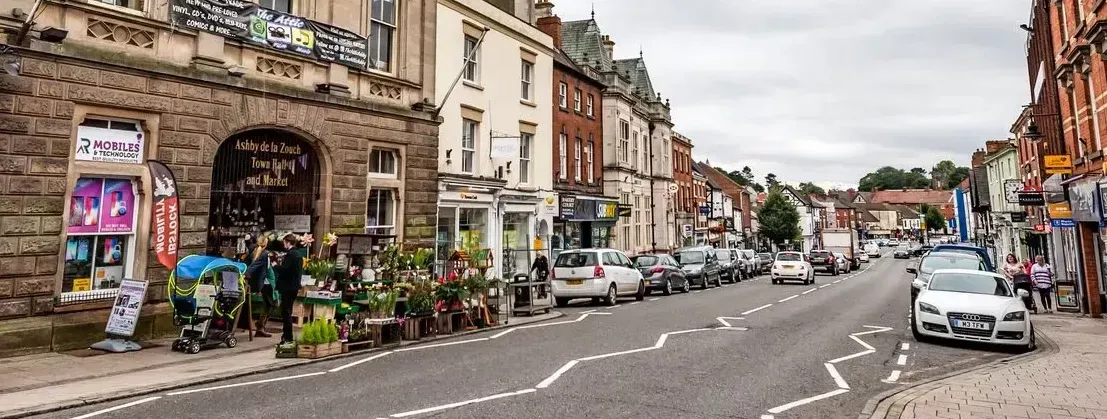
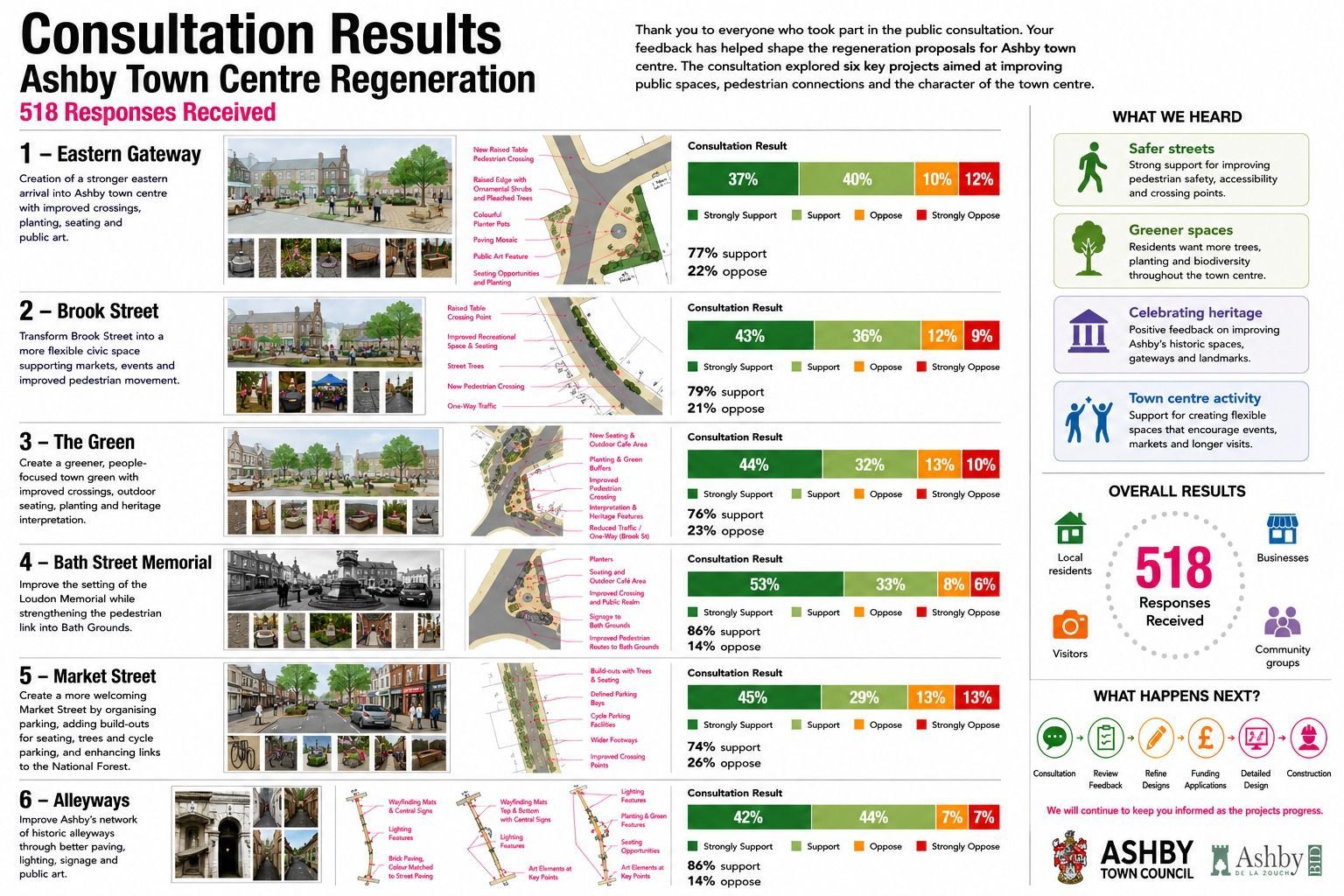
The final report for the Ashby Town Centre Regeneration Plan is now available to view, along with a summary of the feedback received on each of the proposed projects.
The next stage of the work will involve undertaking traffic modelling to understand the potential impact on the road network, as well as developing high-level plans for the proposed projects.
Thank you to everyone who took the time to view the plans and provide feedback. We will keep you informed of any future developments relating to this work.
Summary of feedback
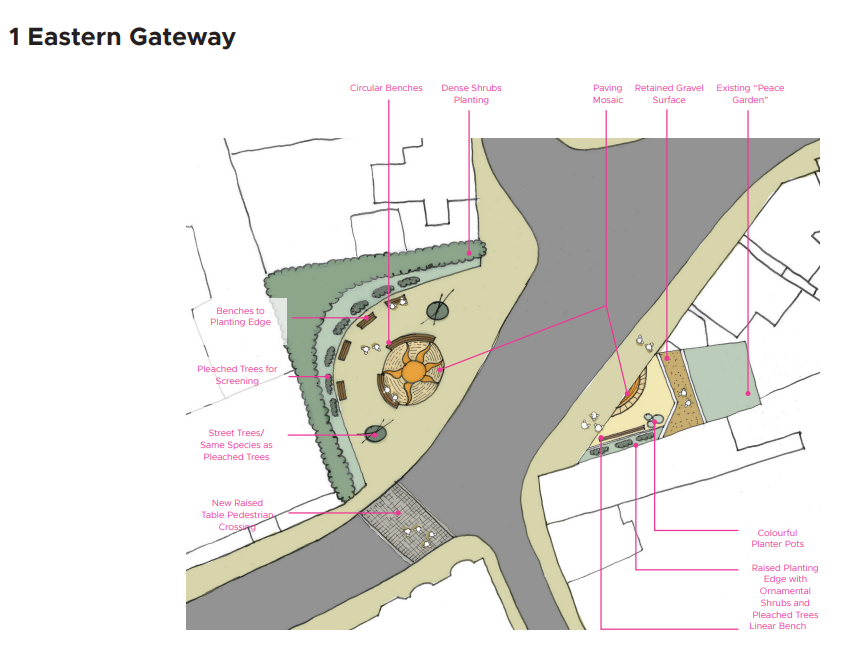
Eastern Gateway
Top 10 common answers/themes
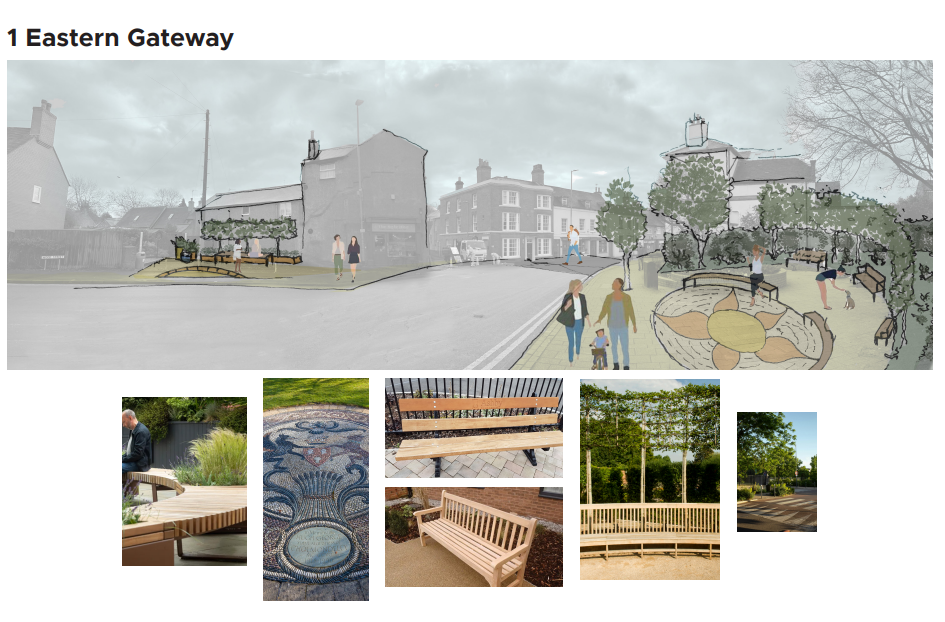
1. Keep Paddington / retain the Paddington garden: Many respondents specifically asked for Paddington to stay and wanted the WI/Paddington garden protected.
2. Do not remove existing gardens or raised flower beds: A frequent concern was that the current planted areas are attractive, well maintained, and should not be replaced by paving or mosaic.
3. Concerns about an additional pedestrian crossing causing congestion: Many people worried another crossing would worsen traffic on Market Street, Wood Street, North Street, and nearby junctions.
4. Support for a pedestrian crossing / safer crossing point: A sizeable group supported a crossing at this end of town, especially for access between Lower Church Street, North Street, Market Street, and for schoolchildren.
5. Traffic calming and speed reduction are needed: Several responses supported raised tables, speed humps, 20mph enforcement, or other measures to slow vehicles entering Market Street.
6. The proposal may be a waste of money or not needed: Many said the area is already pleasant or that funds should be used elsewhere.
7. Protect volunteer/community work: Respondents frequently mentioned the WI, Lions, Rotary, and other volunteers who currently maintain the gardens, saying they should be consulted and supported.
8. Maintenance concerns: People asked who would maintain any new planting, seating, mosaic, murals, or landscaping, and worried it may deteriorate.
9. Improve accessibility and pedestrian experience: Some welcomed better access for wheelchair users, prams, visually impaired people, and pedestrians moving between parts of town.
10. More greenery, planting, trees, and biodiversity preferred over hard landscaping: Many favoured retaining or increasing planting, trees, flower beds, wildlife-friendly features, and sustainable drainage rather than adding more paving.
Brook Street
Top 10 common answers/themes
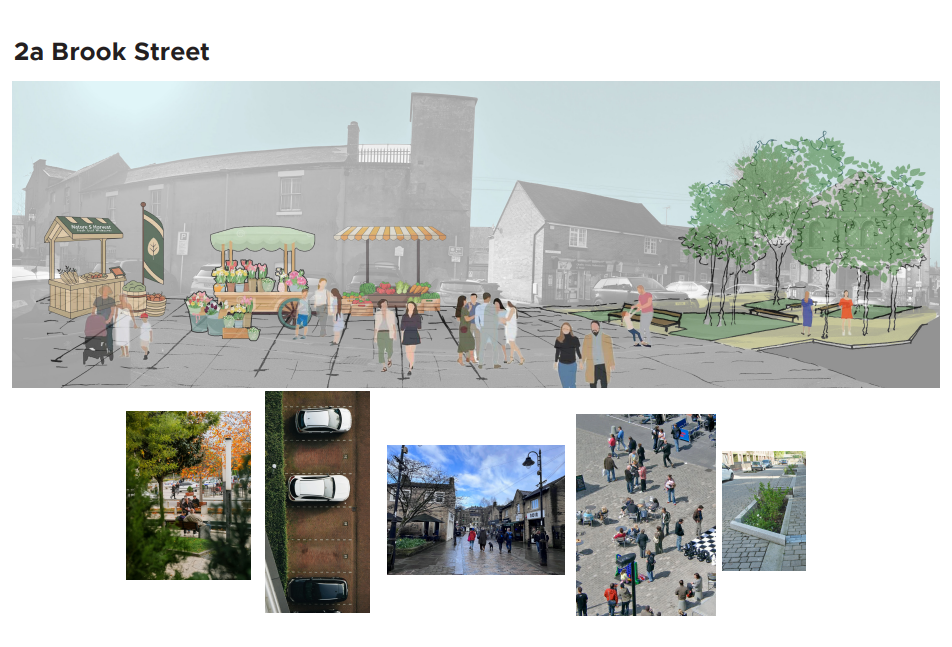
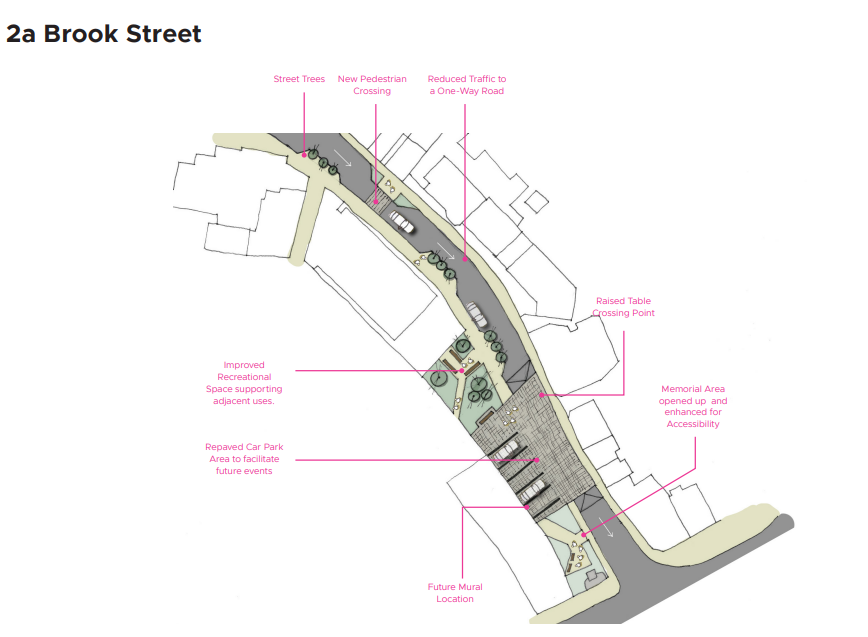
1. One-way traffic was the dominant and most contested issue. The one-way proposal attracted the greatest volume of comment. There was support for making Brook Street one-way to improve safety and reduce conflict at the Market Street junction, but a large number of respondents objected to the proposed direction. A repeated view was that, if one-way is introduced, traffic should flow away from Market Street towards The Green/North Street rather than into Market Street, to avoid worsening congestion and to reflect current travel patterns.
2. Pedestrian safety was a very strong recurring concern. Many respondents described Brook Street, especially the junction with Market Street and the area around the memorial, as unsafe or difficult to cross. Concerns included fast-moving traffic, poor visibility, vehicles turning sharply from Market Street, narrow pavements forcing people into the road, and near misses involving children, older people, wheelchair users, mobility scooter users and people with prams.
3. Wider footpaths and improved accessibility were widely supported. A large number of comments welcomed wider pavements, particularly along the memorial side of Brook Street. Respondents repeatedly highlighted accessibility issues for wheelchair users, people with mobility needs, church users, parents with pushchairs, neurodivergent pedestrians needing clear routes, and people who currently struggle to pass safely without stepping into the carriageway.
4. Parking loss was one of the strongest objections. Many respondents were concerned that reducing parking would harm town-centre access, local businesses, church attendance, blue badge users, short-stay visitors and people with limited mobility. Several comments argued that Ashby already lacks sufficient convenient parking and that any loss should be replaced elsewhere before the scheme proceeds.
5. Traffic displacement and congestion were repeatedly raised. Respondents frequently warned that restricting Brook Street could push traffic onto Derby Road, North Street, Market Street and the lower mini-roundabouts. Concerns included longer routes to schools, nurseries, the leisure centre and library, increased congestion near Wetherspoons and Bath Street, impacts on buses, and potential delays for emergency vehicles.
6. There was significant support for going further towards pedestrianisation or access-only use. A notable group of respondents felt the proposal did not go far enough and suggested closing Brook Street at the Market Street end, making it pedestrian-only, access-only, no-through-road, or a dedicated public space. These comments often linked pedestrianisation to safer crossings, better use of the memorial area, more attractive public realm and stronger market-town character.
7. Events, markets and the Ashby Statutes were a major practical consideration. Many respondents supported creating a better event and market space, with some wanting a more regular or permanent market. However, others were worried that trees, seating, raised areas or reduced road space could interfere with the Statutes Fair, artisan markets, church access, the Soapbox, scooter rally or other established events. Several asked for event operators, the church and affected stakeholders to be consulted before detailed design.
8. The memorial garden was frequently supported as an area needing improvement. Many comments welcomed opening up or improving the memorial garden, making it more visible, accessible and respectful. Respondents also asked that it remain protected, well maintained and appropriate for remembrance use. Some queried whether it should be moved, linked more directly to any new garden space, or kept fenced to prevent vandalism.
9. Green space and public realm improvements were generally welcomed, but maintenance concerns were common. Respondents liked the idea of planting, trees, benches, shade, biodiversity, a more attractive street scene and a pocket park-style space. At the same time, they raised practical concerns about tree roots lifting paving, wet leaves, litter, vandalism, lighting, ongoing maintenance, drainage, climate resilience and whether seating would be well used in a traffic-dominated area.
10. Business, church, cycling, deliveries and public transport impacts need clearer resolution. The full response set repeatedly highlighted the need to protect access to Brook Street businesses, Ashby Baptist Church, deliveries, buses, cyclists and disabled users. Comments asked for clearer details on blue badge parking, drop-off/pick-up arrangements, bus route implications, cycle provision, business servicing, signage, and how the scheme would avoid cutting off existing users while still improving safety and public space.
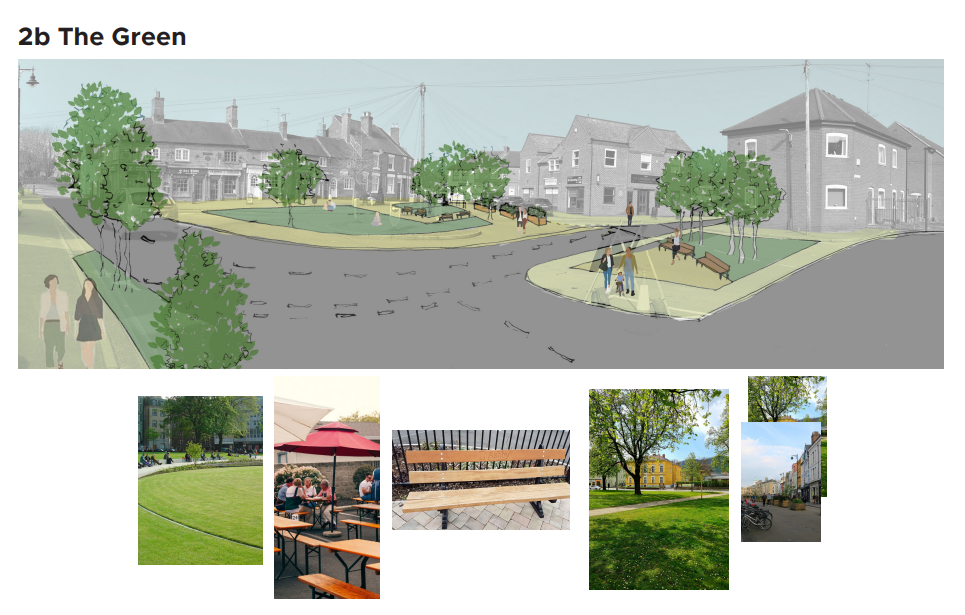
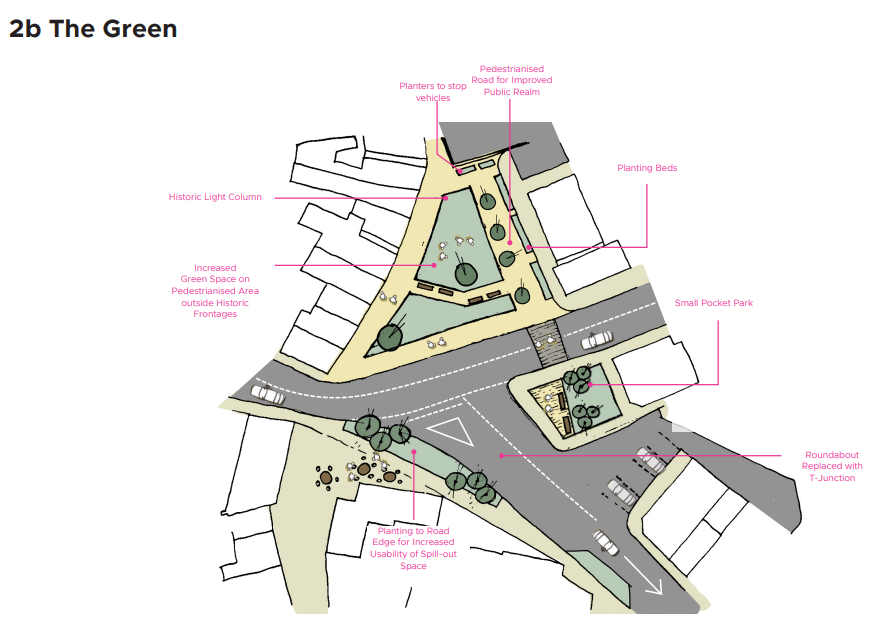
The Green
Top 10 common answers/themes
1. Support for more greenery and trees: Many respondents welcomed making “The Green” greener, with trees, planting, shade and more attractive public space.
2. Concerns about loss of parking: A frequent concern was that removing parking would make access harder for shoppers, residents, visitors and local businesses.
3. Mill Bank and residential access: Many comments asked how residents, vulnerable people, emergency vehicles and deliveries would access Mill Bank and nearby homes.
4. Impact on local businesses and the pharmacy: Respondents highlighted the need to maintain convenient access to the pharmacy, bakery, pubs and other businesses, especially for people with mobility needs.
5. Traffic flow and congestion worries: Several people felt replacing the roundabout with a T-junction and changing Brook Street traffic flow could create congestion or make journeys longer.
6. One-way system direction: A recurring theme was that if Brook Street becomes one-way, the proposed direction may be wrong and should be reconsidered.
7. Pedestrian safety and crossings: Many supported safer crossings, traffic calming, narrower roads, better pavements and improved accessibility for pedestrians, wheelchair users and visually impaired people.
8. Maintenance and upkeep: Respondents asked who would maintain new planting, seating and public spaces, with concerns that they could become untidy or neglected without a funded plan.
9. Public seating, spill-out space and antisocial behaviour: Some welcomed seating and outdoor use, while others worried about noise, drinking, obstruction, litter, vandalism or conflict with nearby residents.
10. Mixed views on value and priority: While many liked the concept, others felt it was unnecessary, not a priority, a waste of money, or less important than other
town-centre improvements.
Bath Street – Loudoun Memorial
Top 10 common answers/themes
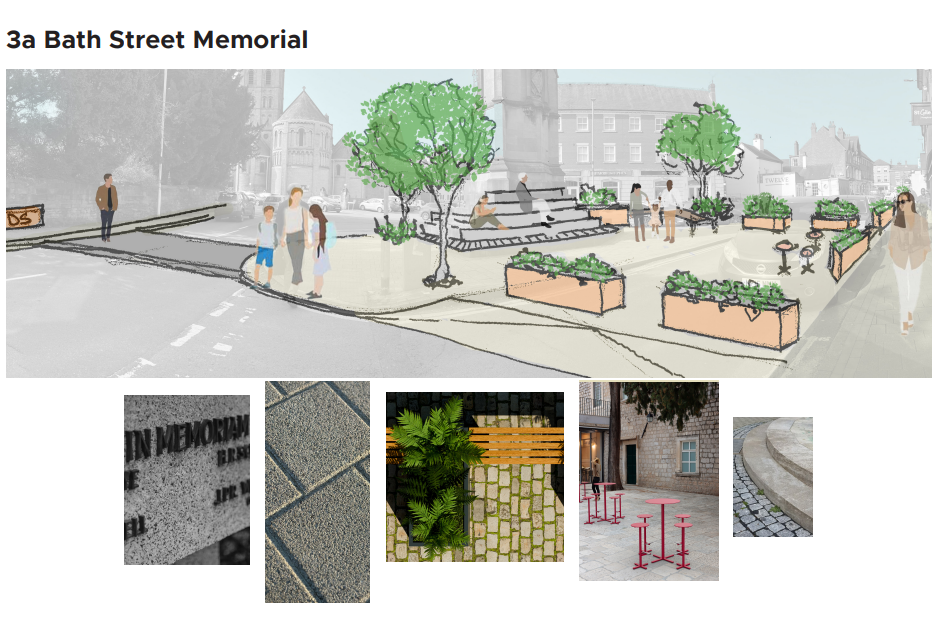
1. Broad support for improving the area: Many respondents describe the proposal as a good, sensible or excellent idea, particularly where it improves the look and use of the space around the memorial.
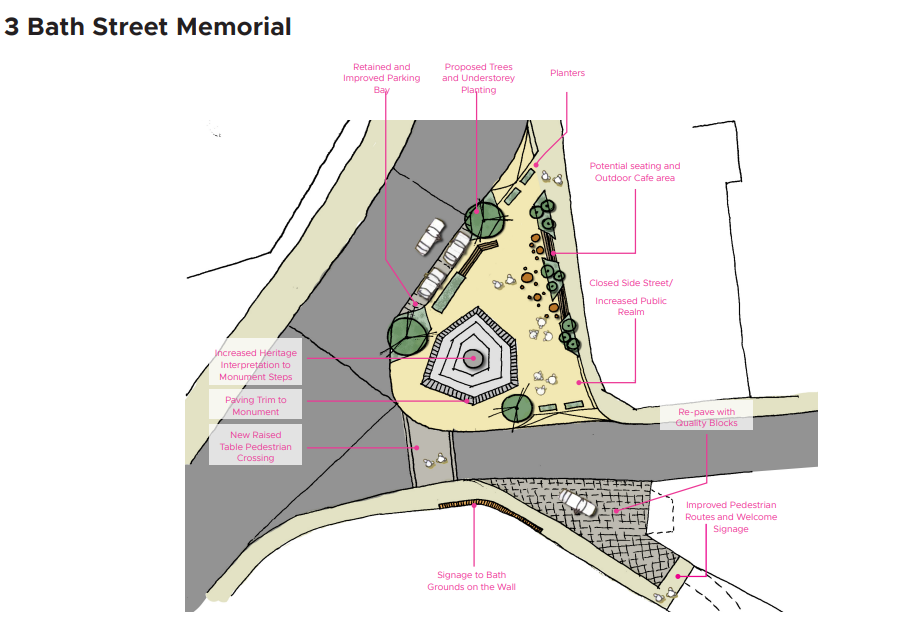
2. Strong demand for safer pedestrian access to Bath Grounds: A recurring theme is the need for a safer, clearer crossing between Bath Grounds and the town centre, especially for families, older people, wheelchair users, cyclists and scooter users.
3. Concerns about loss of parking: The most frequent objection is the removal of parking spaces, with concerns about impacts on residents, nearby businesses, shoppers, visitors and town centre accessibility.
4. Crossing location and design concerns: Several respondents support a crossing in principle but question whether the proposed position follows the natural walking route or creates risks close to the South Street junction.
5. Support for closing or reusing the slip road: Many comments view the small road by the memorial as underused, unsafe or mainly used for parking, and support replacing it with pedestrian space.
6. Traffic flow and junction impact: Respondents raise concerns that closing the slip road or adding a raised table could worsen congestion, make South Street harder to exit, or create difficulties for larger vehicles and deliveries.
7. Enhancing the Loudoun Memorial: Many respondents welcome making the memorial more visible and attractive, but some ask that its correct name, heritage value and visual prominence are respected.
8. Questions about seating, café use and anti-social behaviour: Some support more seating and outdoor café-style space, while others question whether the location is suitable or worry it could attract anti-social behaviour.
9. Need for maintenance and litter provision: Comments highlight that planters, greenery, lighting and public realm improvements will need funded maintenance, litter bins and clear accountability to avoid decline.
10. Accessibility, inclusivity and design quality: Respondents ask for wheelchair-accessible layouts, appropriate seating heights, clear signage, high-quality paving, heritage-sensitive materials and planting that supports the town’s character.
Bath Grounds entrance
Top 10 common answers/themes
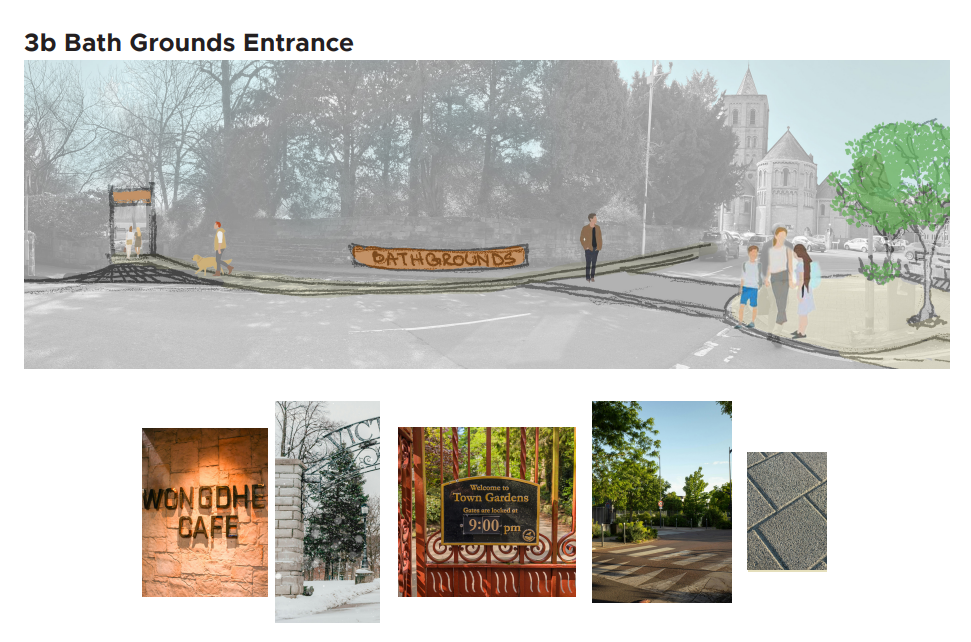
1. Strong support for improving the Bath Grounds entrance: Many respondents welcome the proposal, describing the entrance as needing improvement, a facelift, or a more attractive and impactful gateway.
2. Better signage and visibility: A recurring theme is that the Bath Grounds can be easy to miss, especially for visitors, so clearer, tasteful and more prominent signage is widely requested.
3. Safer pedestrian crossing: Many comments highlight concerns about crossing safely near Station Road, including poor visibility, blind spots and the need for a zebra crossing, raised crossing or clearer pedestrian priority.
4. Parking and traffic concerns: Several respondents raise concerns about parking pressure, dangerous on-street parking, loss of spaces, access for vehicles and the need for better traffic management around the entrance.
5. Accessibility improvements: Respondents mention wheelchair access, better footing, smoother paving and making the entrance easier and safer for all users.
6. Design should be sympathetic to Ashby’s character: Some comments support an archway, traditional gateway or heritage-style signage, while cautioning against anything modern, ugly, tacky or out of keeping with the historic setting.
7. Make the entrance more welcoming and destination-like: Many people want the entrance to feel like a proper arrival point to an important town asset, with improved paving, landscaping and a clearer sense of place.
8. Additional facilities and amenities: Suggestions include lighting, bins, benches, a café or coffee hut, a water fountain, more play equipment, community activities and better paths around the grounds.
9. Safety, security and antisocial behaviour: Some respondents mention restricting vehicle or motorcycle access, overnight access control, dog control signage and lighting as ways to make the area feel safer and more accessible.
10. Opposition or uncertainty about need/value: A minority question whether the work is necessary, suggest money could be better spent elsewhere, or say the Bath Grounds should be left alone.
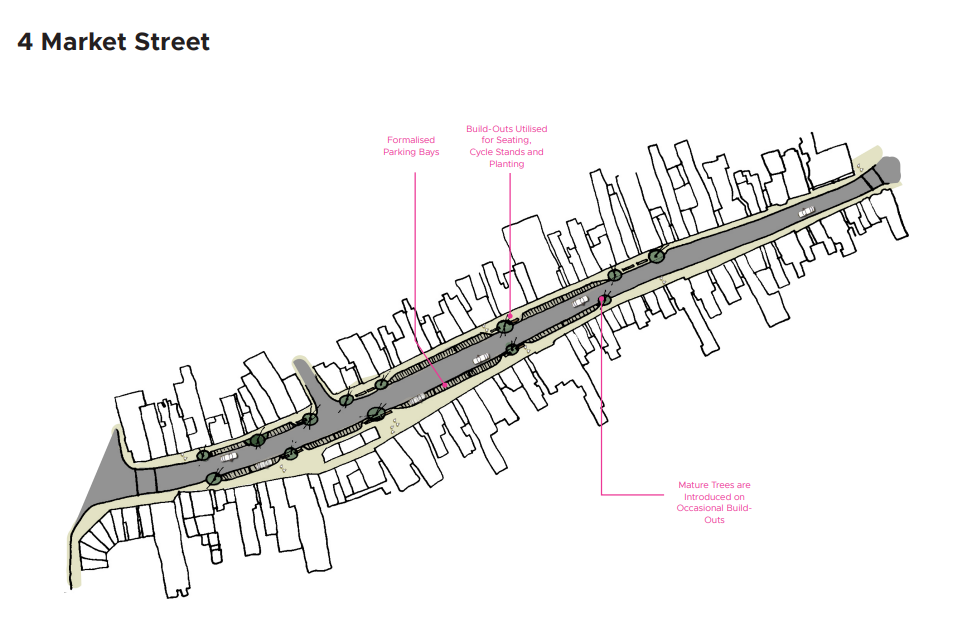
Market Street
Top 10 common answers/themes
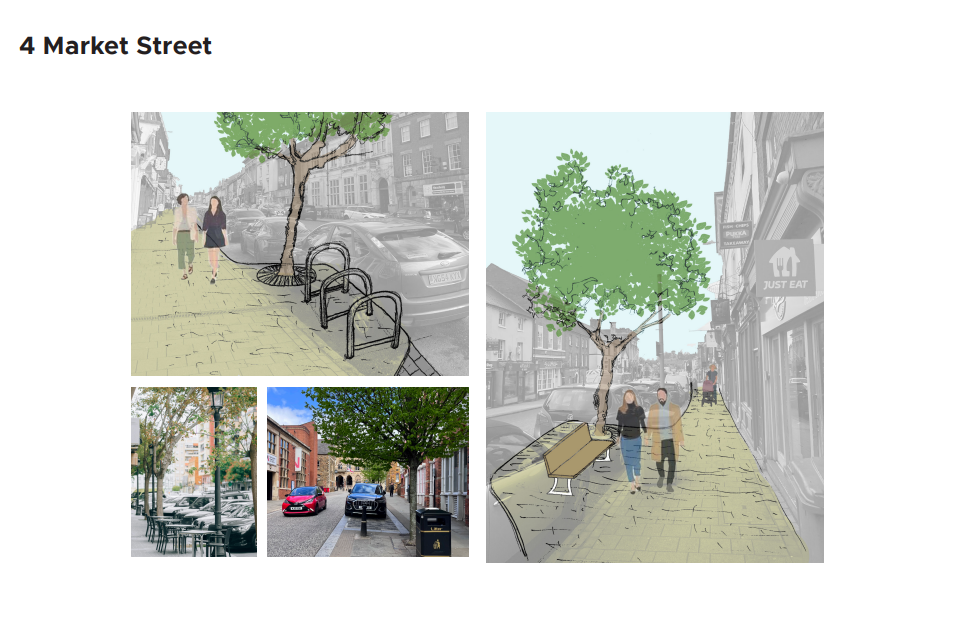
1. Parking availability and short-stay access: The most frequent concern is that reducing free, convenient Market Street parking could discourage visitors, reduce quick shopping trips, and harm local businesses. Many respondents ask for no net loss of spaces, replacement parking nearby, or free short-stay alternatives.
2. Pedestrianisation or reduced traffic: A large number of comments support making Market Street more pedestrian-friendly, with some calling for full pedestrianisation, daytime traffic restrictions, or a one-way system to create more space for walking, seating, events and safer movement.
3. Formalised parking and enforcement: Many respondents support marked or better-defined parking bays to reduce chaotic parking, pavement parking, double-yellow-line abuse and congestion. Stronger enforcement, traffic wardens and cameras are repeatedly suggested.
4. Trees, greenery and planting: There is strong support for more trees, planters, flowers and greenery to soften the street, improve appearance, provide shade and reflect Ashby’s National Forest identity. However, some respondents oppose street trees because of roots, leaf fall, maintenance, visibility and impact on historic character.
5. Traffic flow, congestion and road layout: Respondents frequently raise concerns that build-outs, narrowed carriageways or parking changes could worsen existing congestion. Suggestions include one-way operation, herringbone/diagonal parking, revised junctions, better crossings and improved flow around North Street, South Street and Brook Street.
6. Impact on businesses and town-centre vitality: Many comments link parking, traffic access and street appearance directly to business survival. Some argue easier parking supports shops, while others believe greener, more attractive public space and outdoor seating would increase dwell time and make Ashby more of a destination.
7. Accessibility and disabled parking: A recurring theme is the need to protect or increase disabled parking, ensure wheelchair- and mobility-scooter-friendly routes, avoid clutter on walking lines, provide seating for people with mobility issues and make pavements safer and more accessible.
8. Outdoor seating, social space and events: Many respondents welcome more space for cafés, pubs, seating, markets and events, especially around the natural gathering area of Market Street. Others worry that permanent trees, build-outs or benches could restrict the Ashby Statutes, Soapbox Derby, fairground rides and deliveries.
9. Cycling provision and active travel: Several comments support more secure cycle parking, cycle routes, links to wider paths and safer cycling access into town. Others question demand for cycle racks unless safe, connected cycle infrastructure and CCTV/security are also provided.
10. Maintenance, cleanliness and long-term upkeep: Respondents repeatedly mention the need for ongoing maintenance, street cleaning, litter bins, leaf clearance, tree care, pavement repairs and suitable materials so that improvements do not deteriorate or create new hazards.
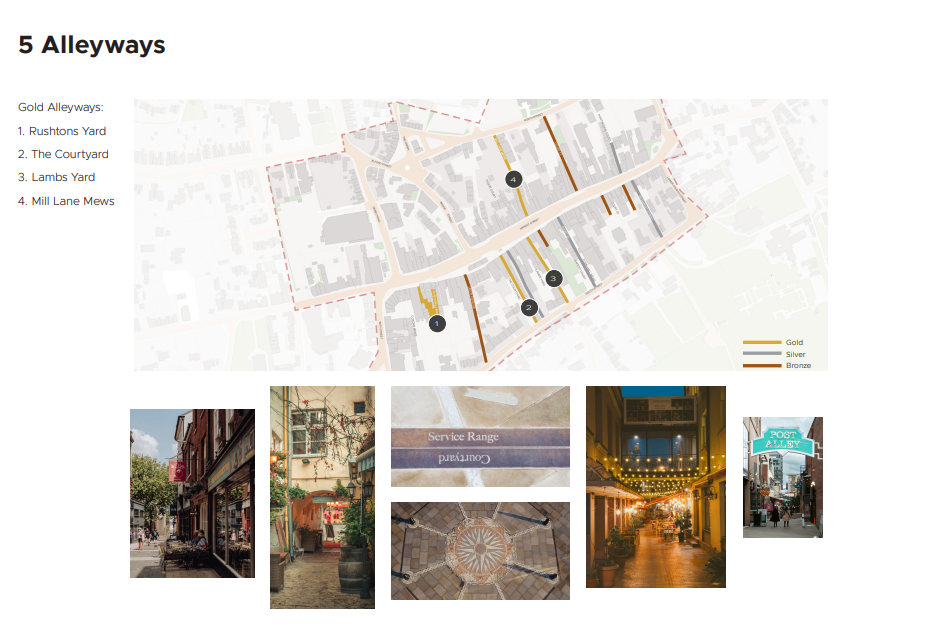
Courts – Alleyways
Top 10 common answers/themes
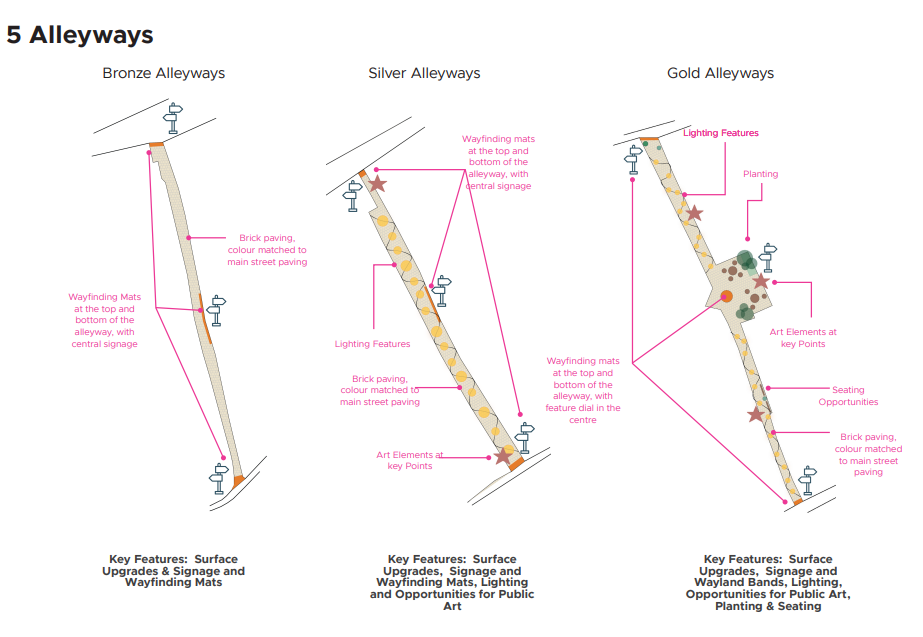
1. General support for improving the alleyways/courts: Many respondents like the principle of enhancing these distinctive parts of Ashby and see them as underused assets.
2. Better signage and wayfinding: A frequent request is clearer, attractive signage to help visitors find alleyway businesses, car parks and routes through the town.
3. Preserve heritage, character and existing names: Many comments stress that these are historic “Courts” or named mews/passages, and that any improvements should respect Ashby’s heritage rather than feel generic or overly modern.
4. Lighting and safety: Improved lighting is one of the strongest practical themes, with respondents linking it to feeling safer, discouraging antisocial behaviour and making routes more welcoming after dark.
5. Cleanliness, maintenance and repairs first: Numerous responses say the priority should be cleaning, litter removal, graffiti control, weed control, surface repairs and ongoing maintenance before adding new features.
6. Concerns about cost and priorities: Several respondents question whether this should be a priority compared with other town-centre needs, and ask where funding and maintenance budgets will come from.
7. Private ownership, access and landlord responsibility: A recurring concern is that many alleyways are privately owned or include private rights of access, so landowner involvement, landlord responsibility and public-spend justification need careful consideration.
8. Parking and business access concerns: Businesses around Mill Lane Mews/Lambs Yard raise strong concerns about losing parking, loading access and safe close access for stock, deliveries and evening working.
9. Accessibility and surface quality: Respondents mention wheelchair, pram and mobility access, calling for safe, non-slip, even surfaces and inclusive design.
10. Mixed views on design codes and classifications: Some support a structured approach, but many dislike the bronze/silver/gold categorisation and prefer each alleyway to retain its own identity, charm and tailored treatment.
This file may not be suitable for users of assistive technology and are in the following formats : .pdf. Request an accessible format.